
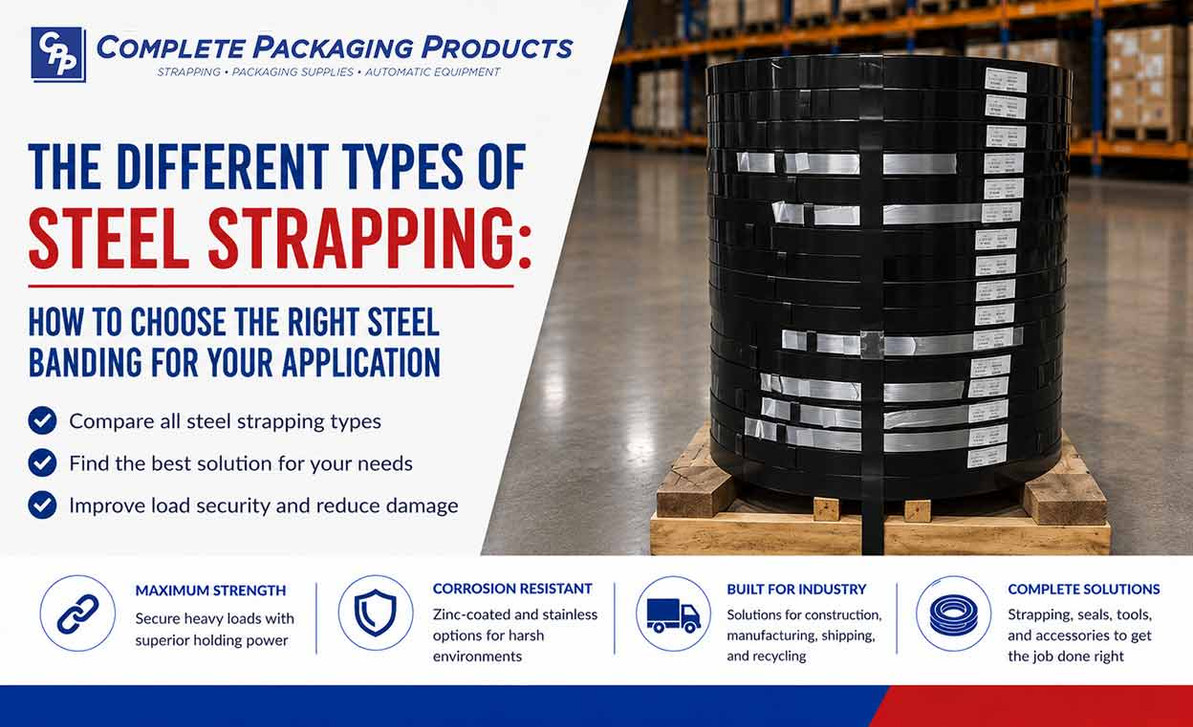
Types of Steel Strapping: A Complete Buyer's Guide
Types of Steel Strapping: A Complete Buyer's Guide
Steel strapping has been the standard for heavy-duty load containment in industrial packaging for decades — and for good reason. It offers high tensile strength, minimal stretch, and the ability to hold rigid, sharp-edged, or extremely heavy loads that other strapping materials simply cannot handle.
But not all steel strapping is the same. From regular duty banding used in everyday warehouse operations to high tensile steel strapping for the most demanding freight applications, the right choice depends on your load weight, environment, and application method. This guide covers every type of steel strapping available at Complete Packaging Products and helps you choose the right product for your needs.
What Is Steel Strapping?
Steel strapping, also called steel banding or metal strapping, is a flat steel strip used to bundle, unitize, reinforce, or secure heavy loads during shipping, storage, and handling. It is applied around a load using a tensioning tool, then sealed in place with a metal seal or a sealless crimping tool.
Steel strapping is commonly used in industries including steel manufacturing, lumber, construction, recycling, agriculture, and heavy freight shipping. It meets ASTM and AAR (Association of American Railroads) specifications for demanding load containment applications, including open-top rail cars and flatbed transport.
Key advantages of steel strapping include:
- High tensile strength for heavy loads
- Minimal elongation — holds tension without giving under load
- Resistance to cutting on sharp-edged products
- Compatibility with manual, pneumatic, and battery-operated tools
- Availability in multiple widths, thicknesses, and coatings
Types of Steel Strapping
Regular Duty Steel Strapping
Regular duty steel strapping is the most widely used type of steel banding in warehouse and distribution environments. It is designed for general-purpose bundling and palletizing of medium to heavy loads that do not require maximum breaking strength.
Regular duty strapping is a cost-effective choice for everyday packaging operations where loads are stable, handled with care, and shipped under standard conditions. It is available in a range of widths and thicknesses to match different load sizes and sealing equipment.
Best for: Palletizing, general bundling, distribution center shipping, unitizing standard industrial loads.
High Tensile Steel Strapping
High tensile steel strapping is manufactured to a higher strength specification than regular duty strapping, making it the right choice for heavier loads, longer transit distances, or applications where loads may shift or be exposed to greater stress during handling.
High tensile strapping is commonly used in steel service centers, pipe and tube bundling, heavy machinery shipments, and rail freight applications where loads must stay fully secured under demanding conditions. It provides the same working width as regular duty strapping but with a higher break strength rating.
Best for: Heavy industrial freight, steel coils, pipe and tubing bundles, rail car shipments, loads subject to high transit stress.
Zinc Coated Steel Strapping
Zinc coated steel strapping is regular or high tensile steel strapping with a galvanized zinc coating applied to the surface. The coating provides a layer of corrosion resistance that makes it well-suited for outdoor storage, moisture-prone environments, and loads that may sit in the elements before or during delivery.
Without a protective coating, standard steel strapping can begin to rust when exposed to moisture, which can weaken the strap and potentially stain the product being secured. Zinc coated strapping helps prevent this, making it a smart choice for lumber yards, building materials suppliers, and any operation with outdoor storage or shipment exposure.
Best for: Outdoor storage, lumber and building materials, loads exposed to rain or humidity, applications where rust staining is a concern.
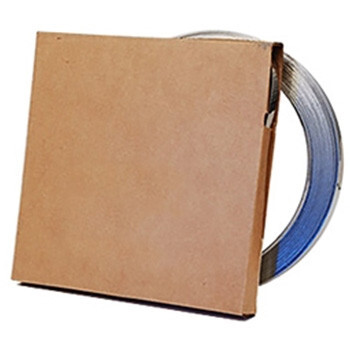
Portable Steel Strapping
Portable steel strapping is packaged in self-contained dispenser boxes or carton packs designed for convenient use in the field, on job sites, or in lower-volume applications where a full coil and cart-mounted dispenser setup is not practical.
Because it comes ready to use out of the box, portable steel strapping is ideal for maintenance crews, contractors, and anyone who needs to strap loads away from a fixed packaging station. It is typically available in regular duty widths and is applied using handheld tensioning and sealing tools.
Best for: Job site and field use, remote locations, low-volume applications, operations without a fixed packaging station.
Looking for a complete portable solution? Portable Steel Strapping Kits bundle strapping, seals, and tools together for a ready-to-use setup right out of the box.
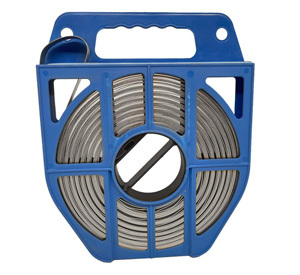
Stainless Steel Banding
Stainless steel banding is the highest-corrosion-resistance option in the steel strapping category. Unlike zinc coated strapping, which has a protective coating that can wear over time, stainless steel banding is resistant to rust and chemical exposure throughout its entire thickness.
Stainless steel banding is used in marine environments, utility and electrical applications, chemical plants, food processing facilities, and any setting where long-term outdoor exposure or contact with corrosive substances is a factor. It requires compatible stainless steel seals, buckles, and tools.
Best for: Marine and coastal applications, utility pole banding, chemical and food processing environments, long-term outdoor installations.
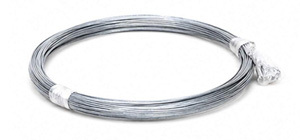
Bale Ties
Bale ties are preformed wire loops used to secure bales of cardboard, paper, plastic, textiles, and other recyclable or compressible materials after they have been compressed in a vertical or horizontal baler. They are looped through baler notches and twisted or knotted to hold the bale together for transport and storage.
Bale ties are a staple in recycling operations, material recovery facilities, manufacturing plants, and retail distribution centers that generate large volumes of compressible waste materials. They are available in single-loop and double-loop configurations to match different baler models and bale sizes.
Best for: Recycling facilities, cardboard and paper baling, plastic and textile baling, manufacturing and distribution waste management.
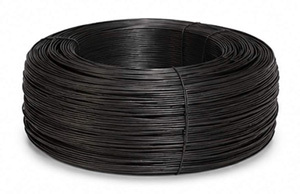
Black Annealed Box Wire
Black annealed box wire is a soft, flexible steel wire that has been heat-treated (annealed) to make it pliable and easy to twist and tie by hand or with automated baling equipment. The black finish is a result of the annealing process and is not a protective coating.
This wire is widely used in vertical and horizontal balers for cardboard, paper, and other recyclable materials. It is also used for general bundling, fencing applications, and industrial tying tasks where a flexible, conformable wire is needed. Box wire is sold in coils and is compatible with many baler wire feed systems.
Best for: Vertical and horizontal baler applications, cardboard and paper baling, general industrial tying and bundling.
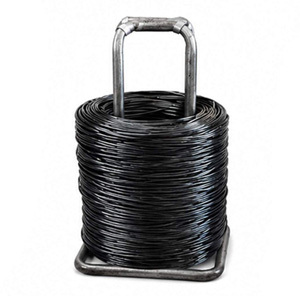
Stump/Stem Wire for Balers
Stump wire, also called stem wire, is a heavy-gauge annealed wire used specifically in agricultural balers to tie hay, straw, cotton, and other field crop bales. It is designed to withstand the mechanical demands of high-volume baling equipment used in farming and ranching operations.
Stump wire is typically sold in large coils or on spools sized to fit common agricultural baler feed systems. It is an essential consumable for farming operations that use wire-tie balers rather than twine-tie models.
Best for: Hay and straw baling, cotton baling, agricultural operations using wire-tie balers.
Steel Strapping Buyer's Guide: How to Choose the Right Type
Use the questions below to narrow down the right steel strapping product for your application.
Step 1: What Are You Securing?
- Heavy pallets, steel coils, or pipe bundles → High Tensile Steel Strapping
- Standard warehouse or distribution loads → Regular Duty Steel Strapping
- Cardboard, paper, or plastic bales → Bale Ties or Black Annealed Box Wire
- Hay, straw, or agricultural bales → Stump/Stem Wire for Balers
Step 2: What Is the Environment?
- Indoor, controlled environment → Regular Duty or High Tensile Steel Strapping
- Outdoor storage or moisture exposure → Zinc Coated Steel Strapping
- Marine, chemical, or long-term outdoor exposure → Stainless Steel Banding
Step 3: Where Will You Be Strapping?
- Fixed packaging station with a dispenser cart → Standard coil steel strapping
- Job site, field, or mobile use → Portable Steel Strapping or Portable Steel Strapping Kits
Step 4: What Tools Do You Have or Need?
Steel strapping requires compatible tools to tension and seal properly. Complete Packaging Products offers a full range of steel strapping tools including manual, pneumatic, and battery-operated options, as well as steel strapping tool kits that pair tools with matching strapping for a complete system. You will also need the correct steel strapping seals to match your strap width and tool type.
Steel Strapping vs. Plastic Strapping: Which Is Right for You?
While steel strapping is the strongest option available, plastic strapping — including polyester strapping and polypropylene strapping — may be a better fit for certain applications. Here is a quick comparison:
| Factor | Steel Strapping | Plastic Strapping |
|---|---|---|
| Break Strength | Highest | Lower (varies by type) |
| Elongation / Shock Absorption | Minimal stretch | Higher elongation — absorbs shock |
| Sharp Edges | Excellent resistance | May cut through on sharp loads |
| Corrosion Resistance | Standard (zinc or stainless for moisture) | Naturally corrosion resistant |
| Worker Safety | Edges can be sharp when cut | Safer to handle |
| Cost | Higher | Lower |
| Best For | Heavy, rigid, or sharp-edged loads | Light to medium loads, settling loads |
If your loads are heavy, rigid, or involve sharp edges — steel strapping is typically the right choice. If your loads are lighter or may settle during transit and need a strap that maintains tension through elongation, polyester strapping is worth considering.
Complete Your Steel Strapping System
Steel strapping works best as part of a complete system. Along with the right strapping material, you may need:
- Steel Strapping Seals — Secure strap ends after tensioning. Must match your strap width and tool configuration.
- Steel Strapping Tools — Manual, pneumatic, and battery-operated tools for tensioning, sealing, and cutting.
- Steel Strapping Tool Kits — Bundled tool and strapping kits for a complete ready-to-use setup.
- Steel Strapping Dispensers — Cart-mounted and portable dispensers to keep strapping organized and accessible on the floor.
- Strapping Accessories — Edge protectors, cargo securement accessories, and other components for a complete packaging operation.
Frequently Asked Questions About Steel Strapping
What width of steel strapping do I need?
Common widths range from 1/2 inch to 1-1/4 inches. Wider strapping distributes load pressure across a greater surface area and is used for heavier or more valuable loads. Narrower widths work well for lighter bundling applications. Your strapping tool and seals must match the width you select.
What is the difference between regular duty and high tensile steel strapping?
Regular duty strapping is made to standard strength specifications and is suitable for most general warehouse and distribution applications. High tensile strapping is manufactured to a higher strength grade, providing greater break strength in the same width and thickness — making it the right choice for heavier or higher-stress applications.
Can steel strapping rust?
Standard steel strapping can develop surface rust when exposed to moisture over time. For outdoor storage or moisture-prone environments, zinc coated steel strapping provides galvanized corrosion protection. For long-term outdoor or marine applications, stainless steel banding offers the highest level of corrosion resistance.
Do I need seals with steel strapping?
Most steel strapping applications require a metal seal to secure the strap after tensioning. Seals must match the strap width and be compatible with your sealing tool. Some manual combo tools are sealless and crimp the strap directly, eliminating the need for separate seals. See our steel strapping seals and sealless manual combo tools for options.
What industries use steel strapping?
Steel strapping is used across a wide range of industries including steel manufacturing and service centers, lumber and building materials, construction, heavy freight and rail shipping, recycling and waste management, agriculture, and industrial manufacturing and distribution.
Shop Steel Strapping at Complete Packaging Products
Complete Packaging Products stocks professional-grade steel strapping from trusted manufacturers including Signode and DuBose, with products made in North America and built to ASTM and AAR specifications. Whether you need regular duty banding for everyday warehouse operations, high tensile strapping for heavy freight, zinc coated strapping for outdoor use, or stainless steel banding for corrosive environments, we have the right product in stock and ready to ship.
Not sure which type of steel strapping is right for your application? Call our packaging specialists at 866-787-2790, Monday through Friday, 8:00 AM to 4:00 PM EST. We'll help you match the right strapping, seals, and tools to your specific load, environment, and equipment.
Recent Posts
-
Why Packaging Quality Matters: Choosing a Supplier You Can Trust
Why Quality Control Is Key for Packaging Suppliers When businesses order packaging materials, they e …Sep 1st 2026 -

How to Shrink Wrap Your Boat for Winter Storage
How to Shrink Wrap Your Boat for Winter Storage Shrink wrapping your boat is one of the best ways to …Sep 1st 2026 -
A Complete Guide to Strapping Solutions
Which Type of Strapping Is Right for Your Application? A Complete Guide Choosing the right strappin …Jul 20th 2026